The hidden skill shaping admissions success
(and why the application process itself is the best training ground)
Over the years I’ve worked with families, a common thread emerges in our conversations: teenagers telling me about the challenges they’re facing in school, or struggling to keep up with the assignments I give them. Despite the structures I put in place, the reminders, and the systems we build together, the 11:30 p.m. scramble still happens. It’s not always because of the essay itself...it’s often about something deeper: executive function.
In our field, we’re used to talking about readiness and preparation in terms of transcripts, test scores, and essays. With parents we talk about school lists and the CSS Profile. For USA focused students especially, counselors (school + IEC) will also point to extracurriculars, especially leadership roles, as a sign that a student is prepared to handle the complexity of university life. But underneath all of those visible and even-sometimes-quantifiable markers is an invisible one: executive function. Without skills like planning, organization, prioritization, self-regulation, and follow-through, even the most accomplished student can end up stressed out, working last minute, struggling to do their work to the quality they know themselves to be capable of. With them, students are far more likely to actually put their abilities to use.
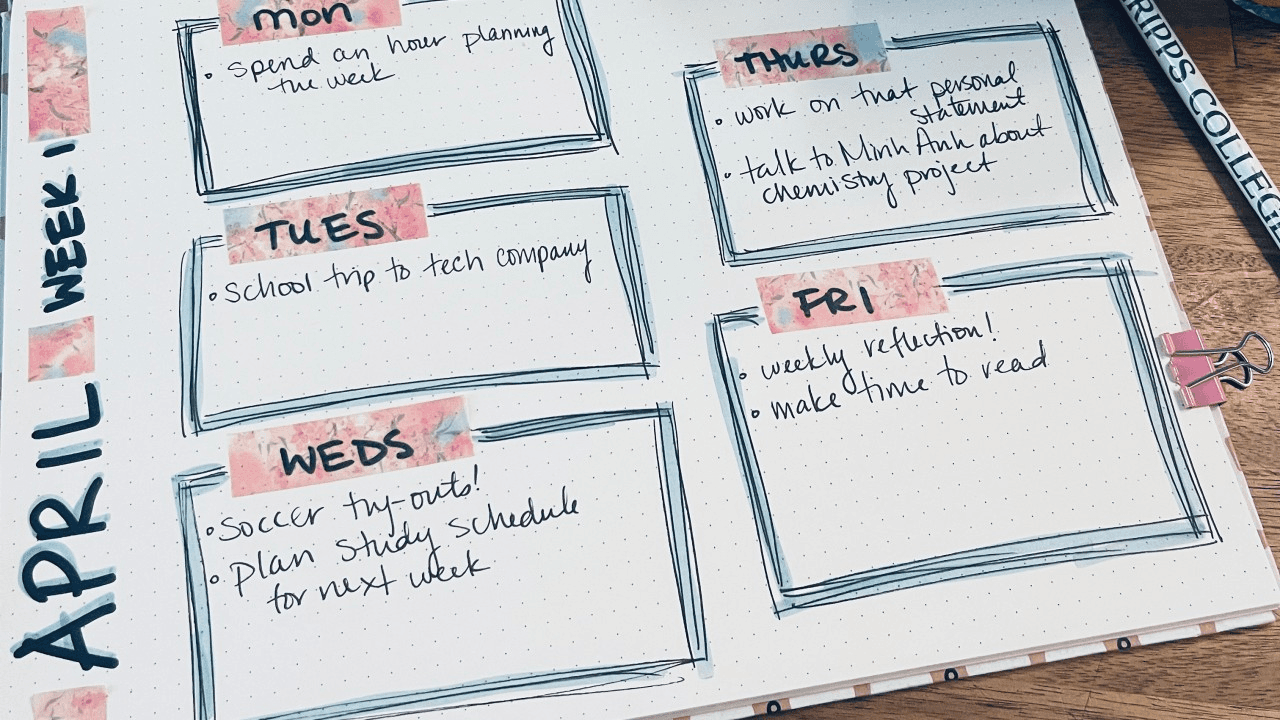
Think about what an application really demands: dozens of moving parts over a long period, from researching majors and schools, tracking deadlines, exploring communities and activities that might support their growth on campus, to the practicalities of managing recommenders, juggling test dates, revising essays, and submitting financial aid forms. Parents and students often assume admissions comes down to polish (the perfect essay or the right test score) but none of that matters if a student can’t manage the process itself. I’ve seen extraordinarily smart student leaders forget to upload a document, or brilliant writers lose track of drafts because their downloads folder has 500+ old things in it, and their desktop wasn't organized. Those aren’t failures of ability. They’re gaps in executive function.
And yet...this is exactly what makes admissions such a rich training ground for EF. Teenagers are in the middle of shifting from parent-led structures to self-management, and the college application season gives them real deadlines, real stakes, and real practice. They learn to juggle long-term and short-term tasks, balance competing priorities, and develop systems that are portable to university life. I’ve always seen counseling and EF work as integrated, and the longer I do this work, the more convinced I am that admissions is not just about outcomes; it’s also about building habits.
Now, to be transparent in these reflections: my process with students is very structured. Over the years, I’ve developed systems that ensure all the tasks get completed, essays are drafted on time, and deadlines are never left to chance. I don’t just “let them figure it out.” But even within that structure, students bring their own challenges, and some of them only make it through in an organized way because I make them. That’s where habit-building comes in. The hope is that the scaffolding I provide eventually becomes theirs. Some embrace it quickly, others drag their feet, but the application cycle gives all of them repeated practice in managing big, complex tasks over time.
I’ll also admit something: while executive function coaching has always been part of my practice in spirit, I’m only now beginning formal training in it. I’ve been a naturally organized, plan-ahead kind of person my whole life (hellllloooo eldest sister), so in the past my style was to model what worked for me. I’d hand students systems, timelines, and checklists; let's call this the “bossy big sister” approach. It was effective, but it also. didn’t always help them build ownership. And if it didn't continue on into the next stage of their academic career... was I really teaching them as much as I thought? Fall doesn't have too many free hours, but I'm spending a few of them in this kind of skill-building. Especially as I learn more about motivational interviewing , I’m shiftings toward asking more questions: What systems do you notice? How do you want to track this? Are you happy with how things are working right now?
For those of us working in any kind of teen-advising capacity, I think the real takeaway is this: the application process is not just a hoop (or even a series of hoops) students jump through. It’s one of the authentic contexts where EF skills can be developed under pressure but with support. If we treat it as only about polished products (essays, scores, résumés) we miss an opportunity to help students grow in ways that will matter long after they hit “submit.”
I’m still exploring how best to integrate formal EF coaching (and motivational interviewing, TBH) into my work, but already I see how relevant it is to what students are struggling with today. And I suspect many of us are informally doing this work already, whether or not we call it by that name. The challenge now is to bring it into sharper focus, to share practices with one another, and to see the admissions process as important for the experience as well as the result. Miley Cyrus was right! “It’s the climb.” 😉